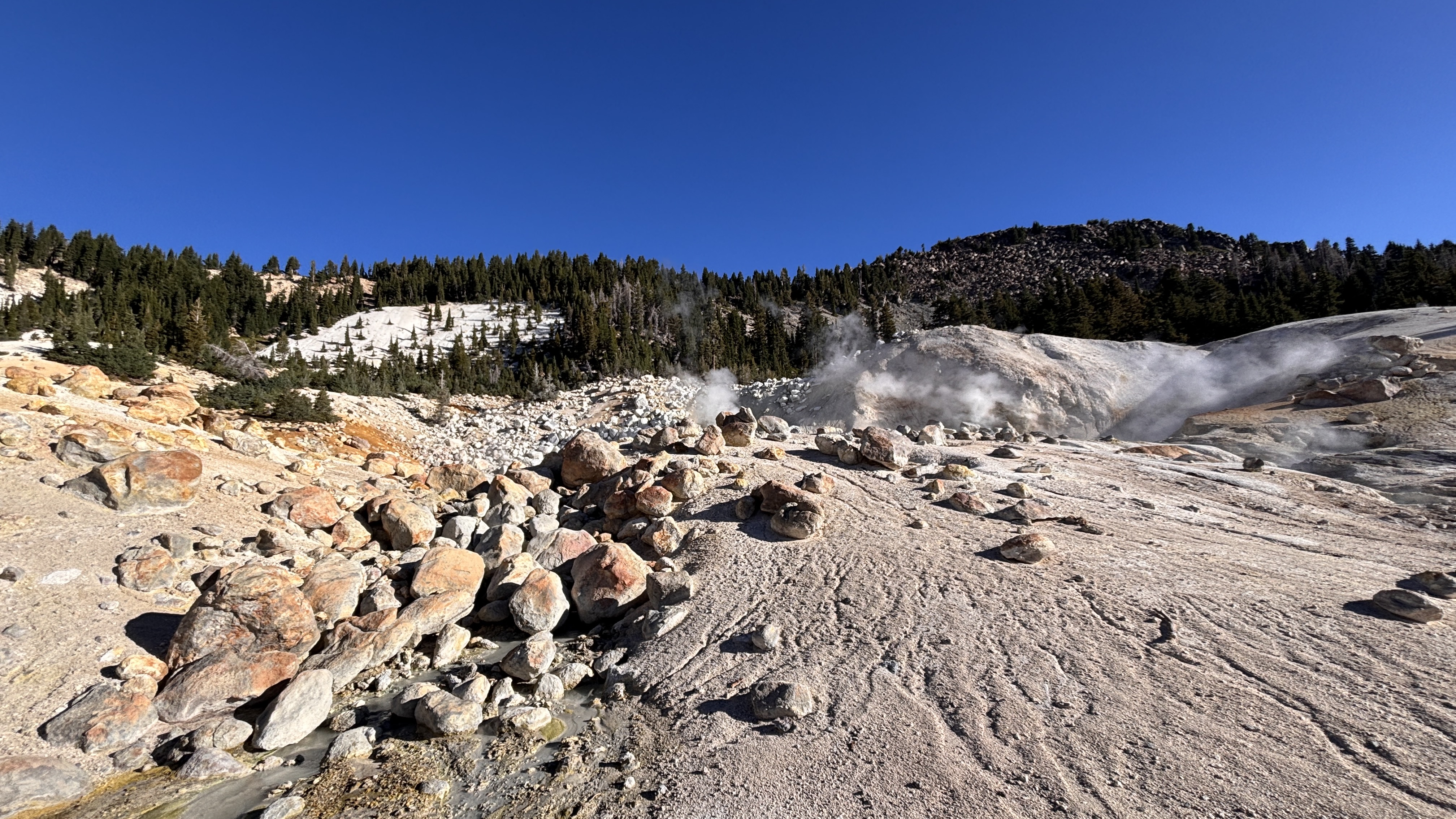
The pungent smell of rotten eggs. Freshly fired cap guns (remember those?). Or a newly-lit match. Sulfur stinks. And so did Lassen.
We had set an alarm for 6:30 this morning, figuring we’d get up and see how we felt before making plans. We knew we had an extra day here near Lassen Volcanic, with great weather, so if either of us didn’t feel up to the park today we’d go back to sleep. Karen is a few days behind me with this bug, so she was definitely feeling it more in the morning. She decided, however, that she wanted to see the park, so in we went.
The morning was spectacular with not a cloud to be seen. Our campsite is less than 10 miles from the entrance gate, and we covered that distance quickly. Our first order of business, of course, was to take a photo with the NPS sign. We don’t know why this is a thing with some people, but it is for us as well, so we look forward to it! It just doesn’t seem like an official visit if there’s no photo with the sign.
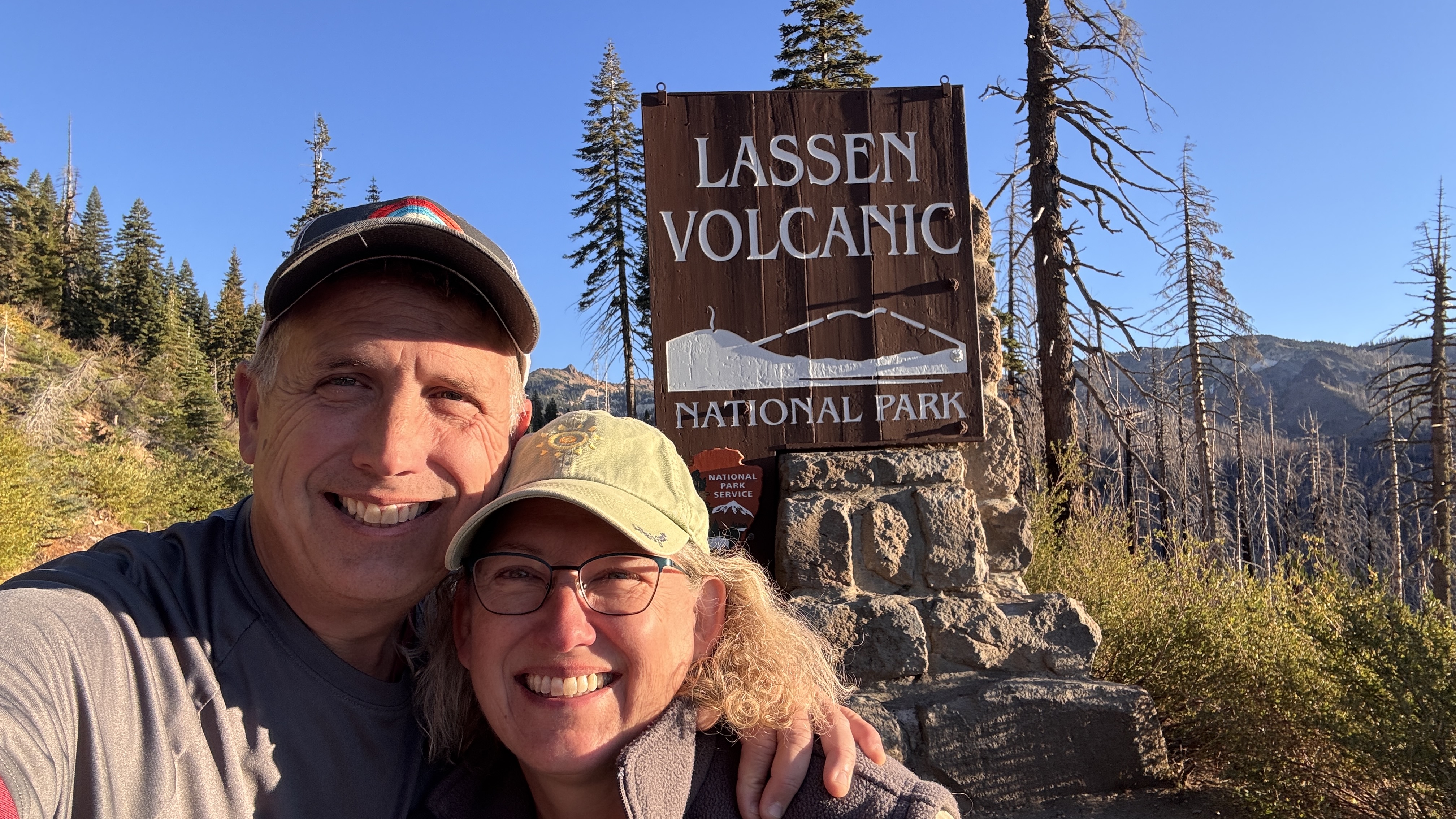
Entering the park before 8:00 a.m. meant no one was at the gates, so we cruised by on the park road. Our campground sits at just under 5,000 feet above sea level. The majority of the park sits well above that altitude, meaning the park road followed a winding, ever increasing incline.
The scenery was stunning. As with other volcanos on this trip, evidence of the volatile history was evident everywhere. Boulders and debris littered the slopes. Areas where plants would likely never take root were visible. Entire hillsides of rock, calcified by the thermal past, stood shockingly white against the surroundings. But yet forests had thrived, in spite of all the odds.
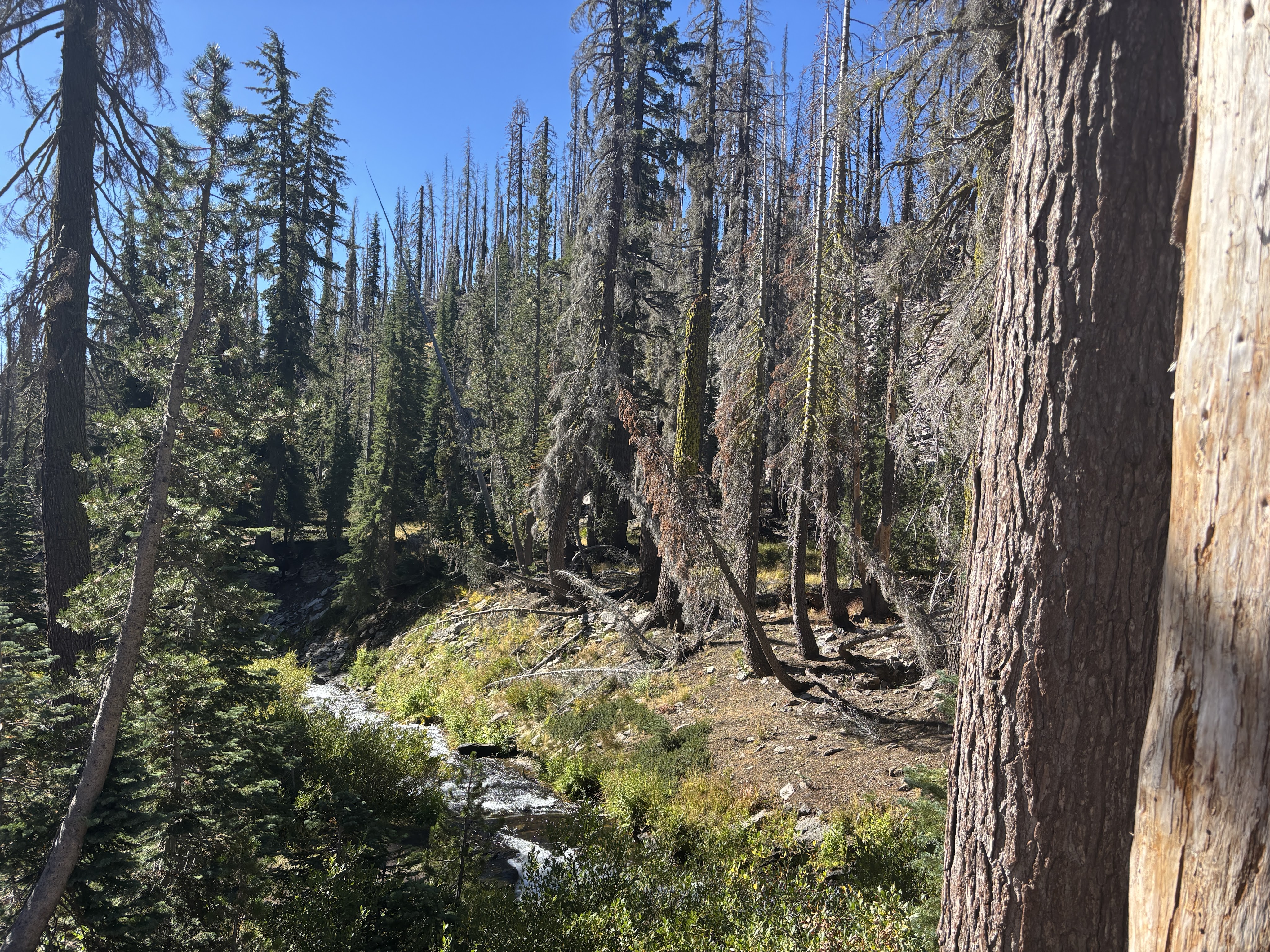
In 2021, California experienced the largest wildfire in its history, the Dixie Fire. The fire started outside the park but winds quickly moved it into NPS lands, including Lassen. The devastating results were clearly visible along much of the route to the park road high point. The park lost almost 94,000 acres, while the entire fire consumed almost a billion.
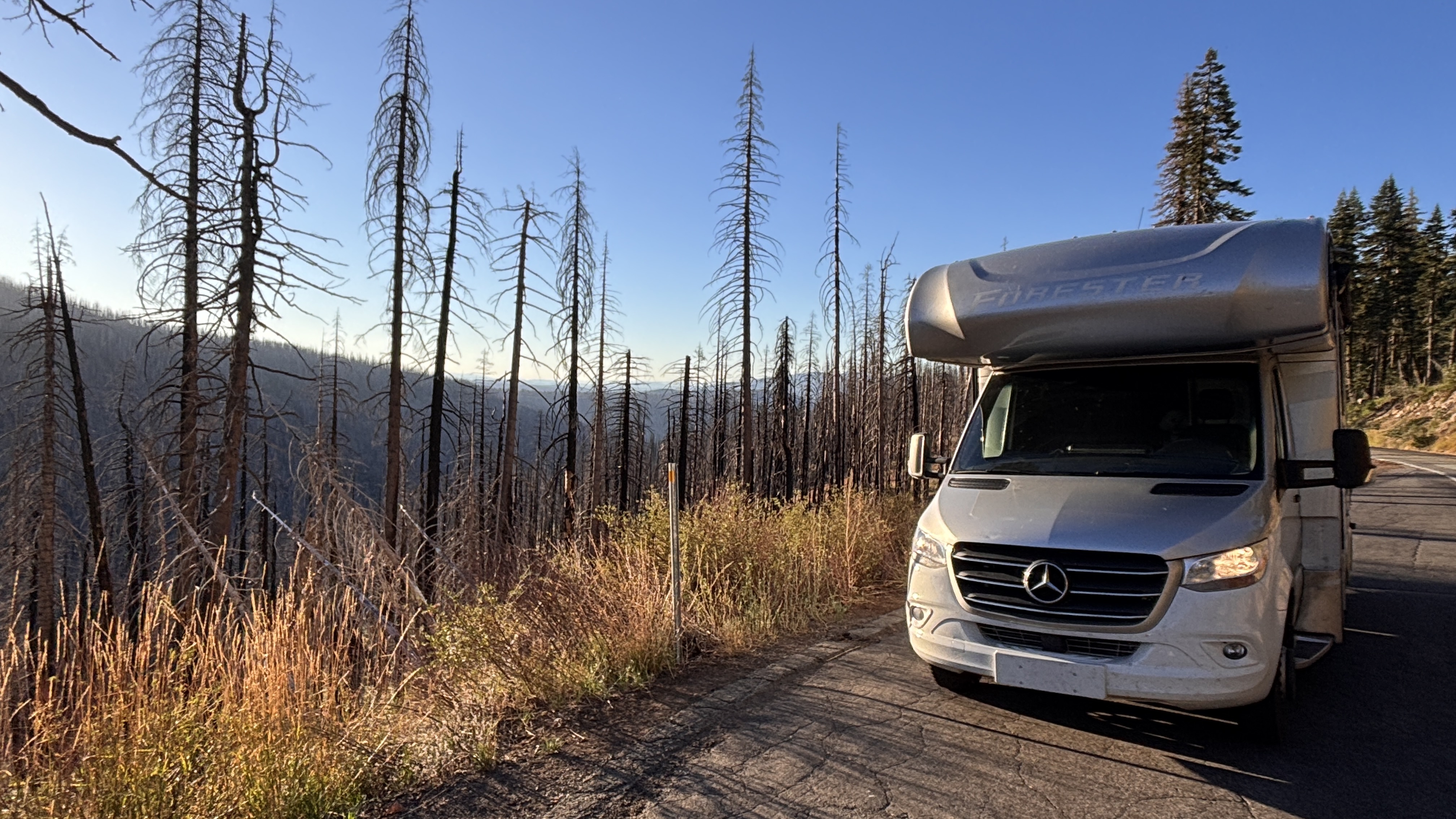
One thing that is consistent across ALL forested parks we’ve visited out west is evidence of wildfire. Scarring is easily seen on nearly every park road. And yet it never ceases to amaze, and humble us, seeing the past violence reflected in the remains. The hulking, charred remains of once vibrant forests standing quietly as a testament to the forces of nature and the movement of time.
Our first stop was at the trailhead for the Bumpass Hell hike. It is the most popular hike in the park, which is why we wanted to get there early and secure parking. As a bonus, fewer people would be on the trail. The parking lot sits at about 8,000 feet above sea level, and we quickly felt it as we started on the hike. Being sick didn’t help things either.
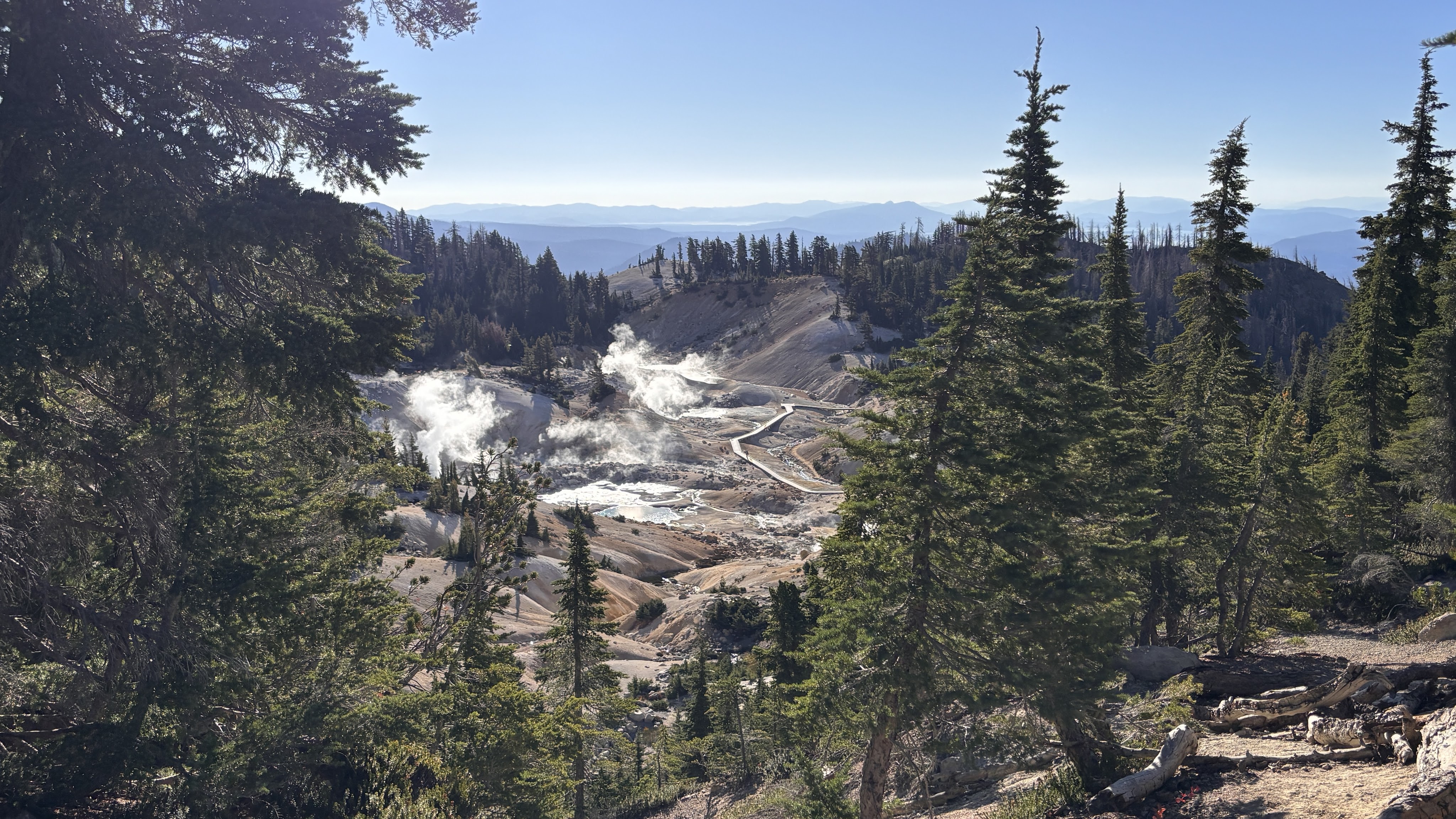
The hike gently climbs up and along a ridge, gradually cresting and dropping down the opposite side into Bumpass Hell. And that’s when the smell hit. Like finding bad hardboiled eggs in the back of the fridge. Or a Stroh’s fart after a night of lighting it up (bonus to you all who remember Stroh’s). It’s not something that is particularly pleasant. And it was potent.
But I loved it!!
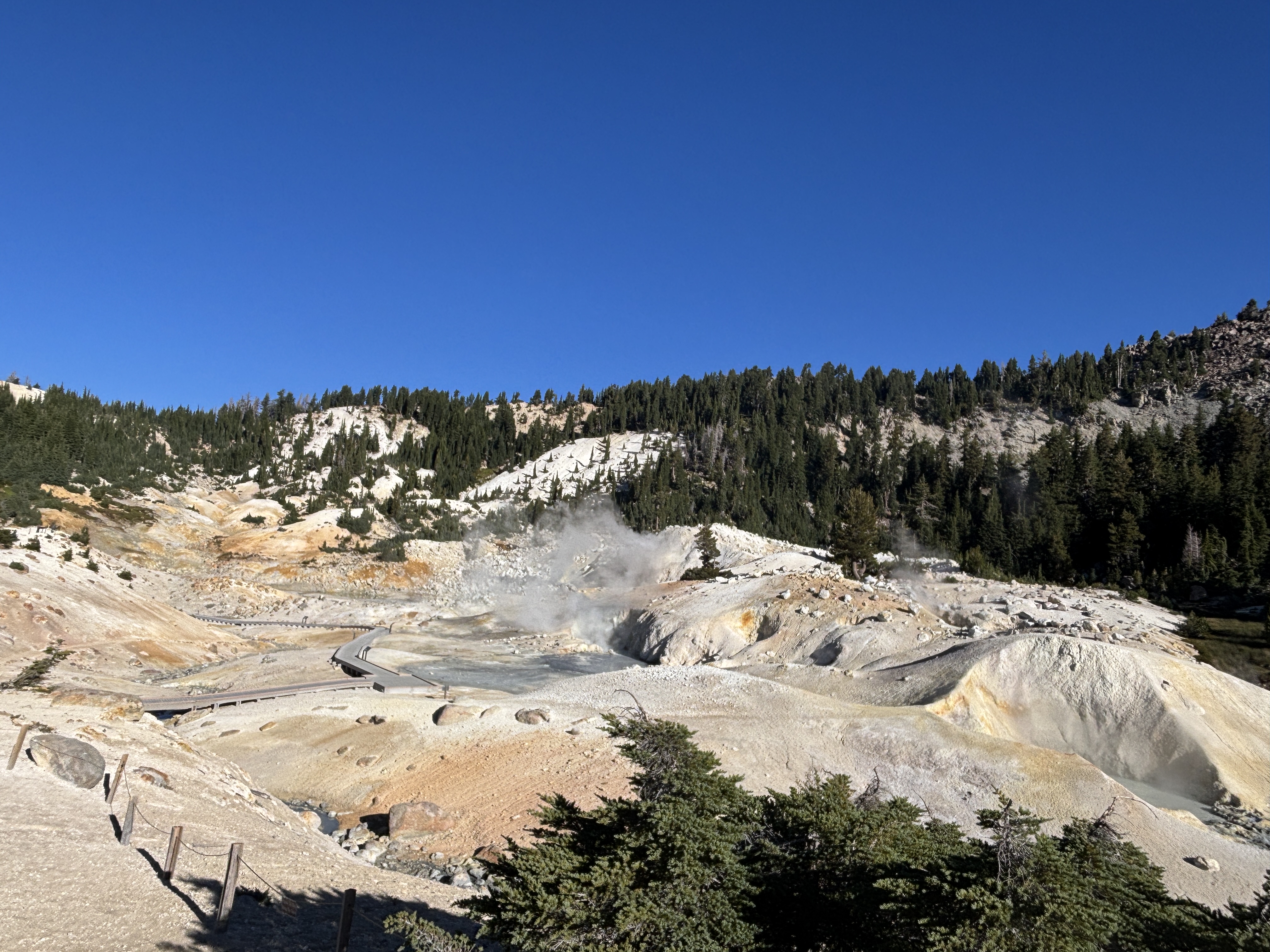
Bumpass Hell is a large, concentrated area of thermal features within Lassen. In fact, it is the highest concentration outside of Yellowstone. If you’ve been there, think a smaller version of Norris Geyser Basin. While the smell is off-putting, I love it because it means being close to a wonderous experience. The land comes alive in these places.
The landscape shifts from browns and reds to whites and yellows and creams. Steam spurts from unseen holes in the ground. Water bubbles as if at a slow boil on the stove. Mud pots belch liquid land. The quiet has been replaced by the hisses and screams of steam as it is squeezed out of the crust. The pools of water vary greatly, some vibrant shades of green and others milky, the color of Bailey’s. Everything around you is moving and shifting and creating. I can’t help but feel insignificant in this continuing cycle of the Earth.
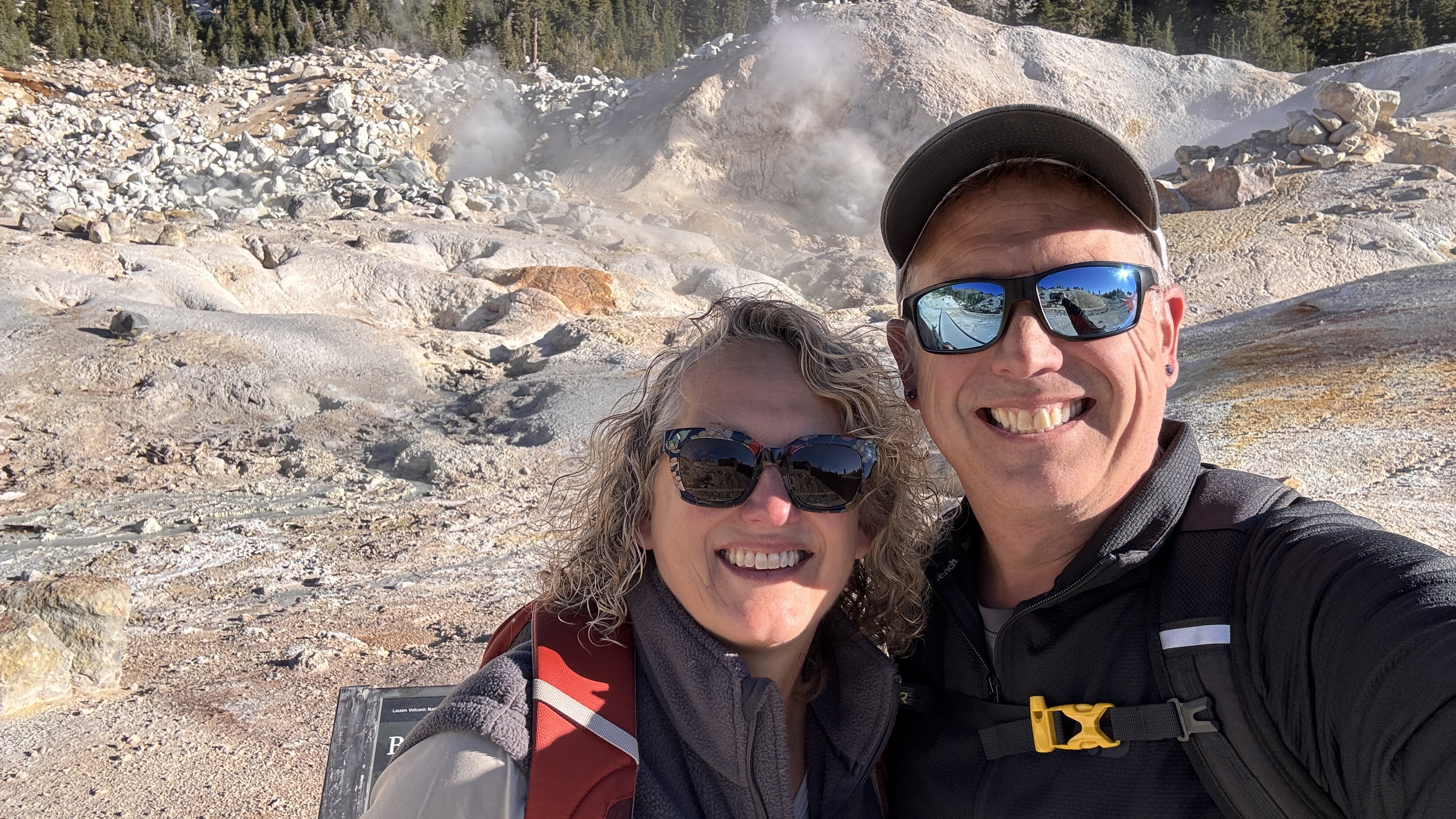
And that’s why the smell of rotten eggs on a trail makes me happy. And why Lassen stinking is a good thing!
The hike was not long, only 3 miles, and had less than 500 feet of total elevation gain. But we were wiped out when we finished. The combination of altitude and sickness, I suppose. But we were SO glad we did that hike. We left the parking lot and continued north on the park road.
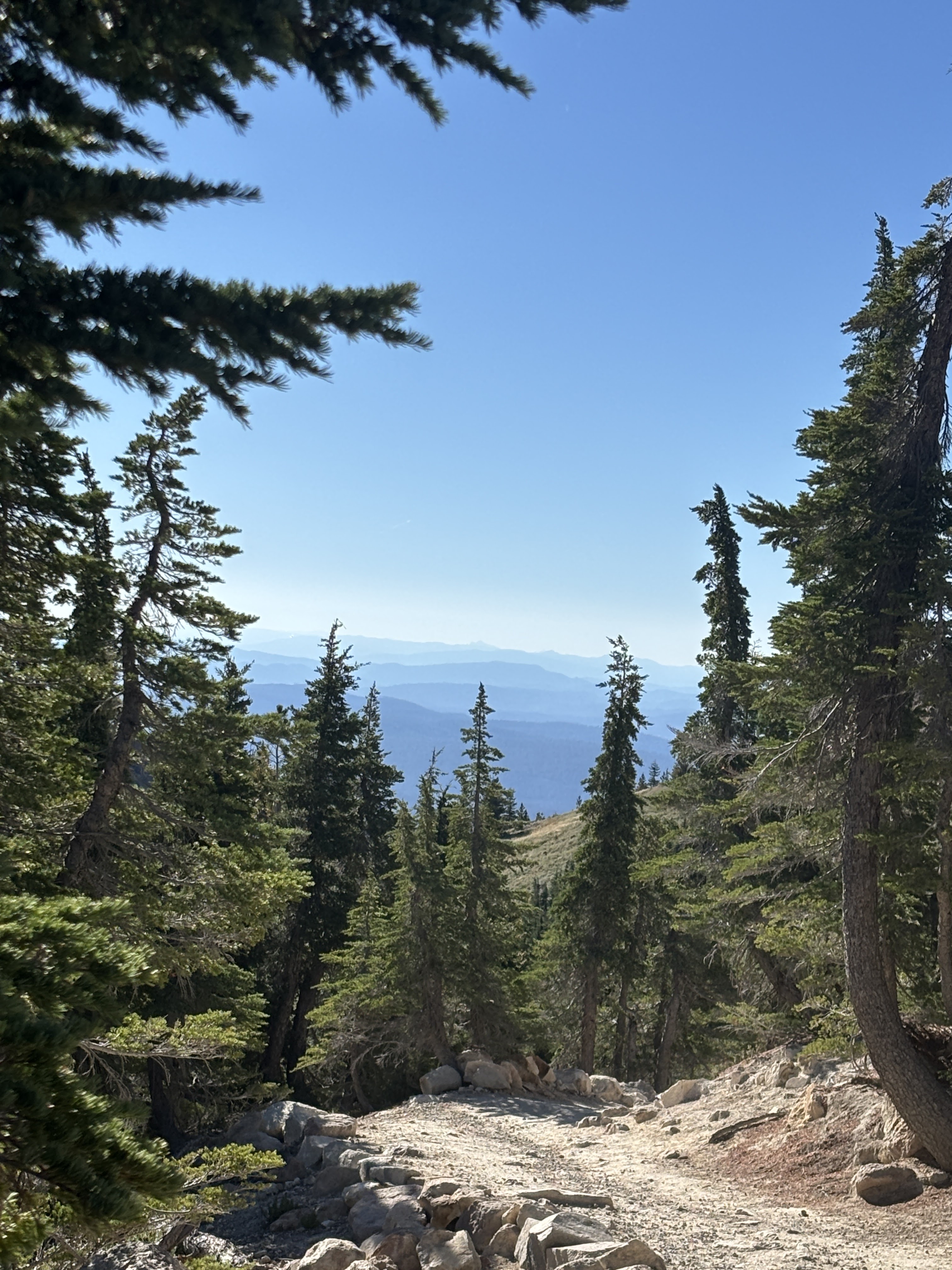
Shortly after the lot, the road hit its high point of just over 8,500 feet and began descending. The views not only of the close-by park lands but into the distance were marvelous. But the reminders of the Dixie fire never went away. They sat on our right as a constant reminder.
We passed through an enormous section of the park named, aptly, the “Devastated Area”. This was where the last big eruption, 100 years ago, did the most damage. Boulder fields stretched as far as we could see. Lodgepole pines, defying odds, had somehow rooted through the debris fields and thrived. Large areas where lahars sloughed down the mountain and left deposits of pumice where little will ever grow. But life somehow finds a way. Even in these areas, beauty exists.
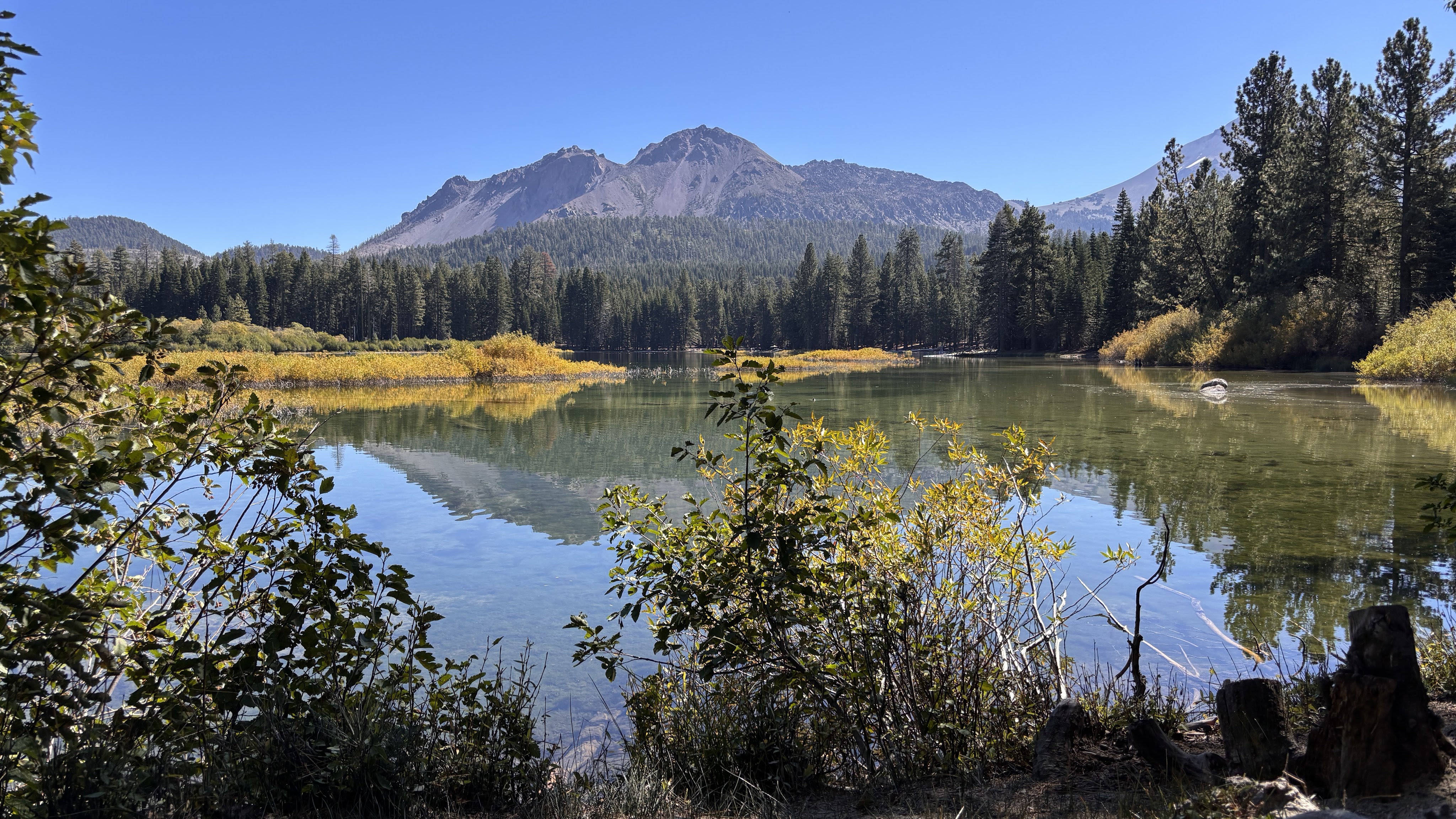
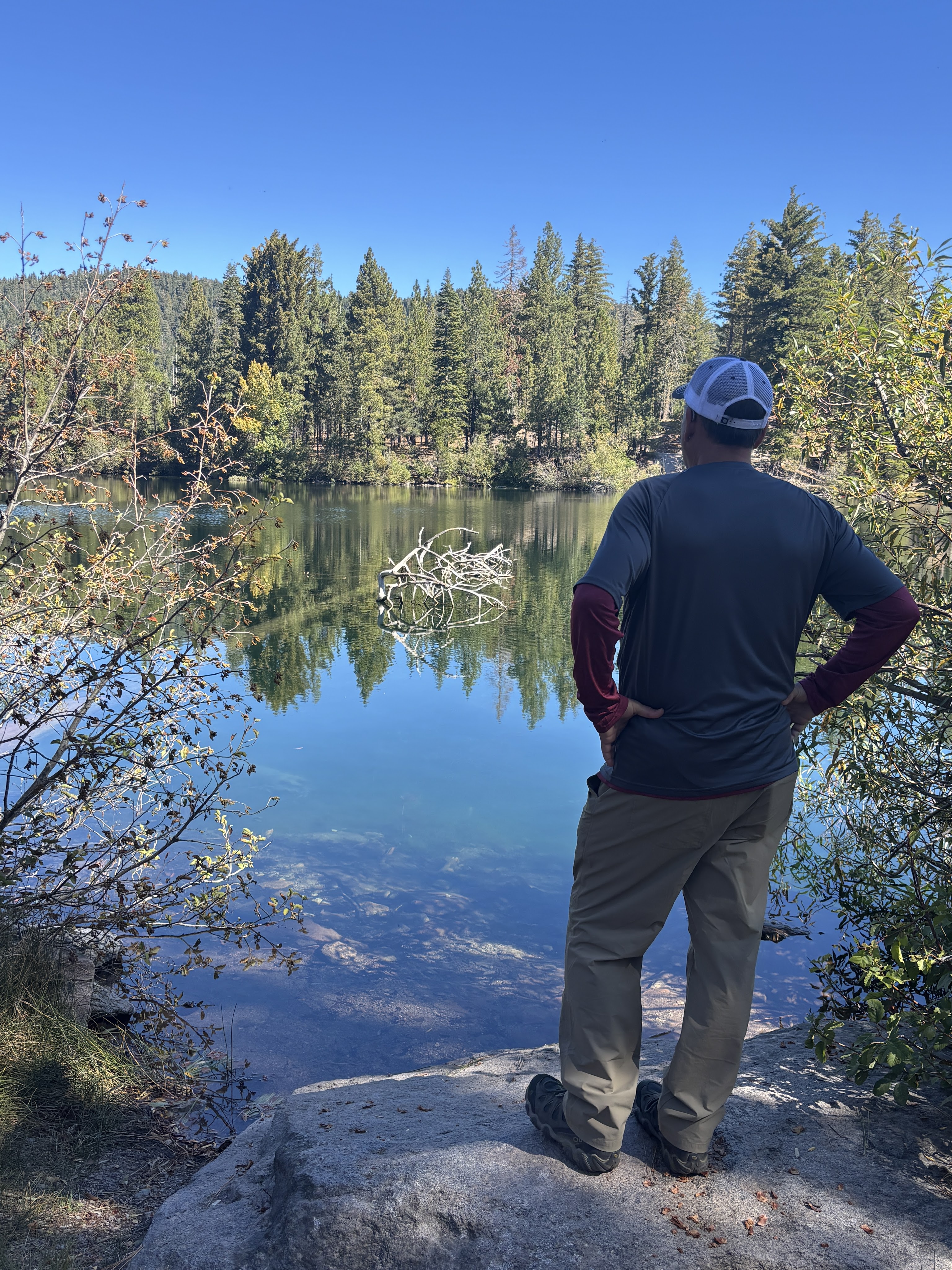
At the northern end of the park road we stopped near Manzanita Lake. There was a stunning walk around the lake, affording us great views of the high peaks of the park. There was also almost no uphill, which we needed! It was a nice bookend to a lovely drive through Lassen.
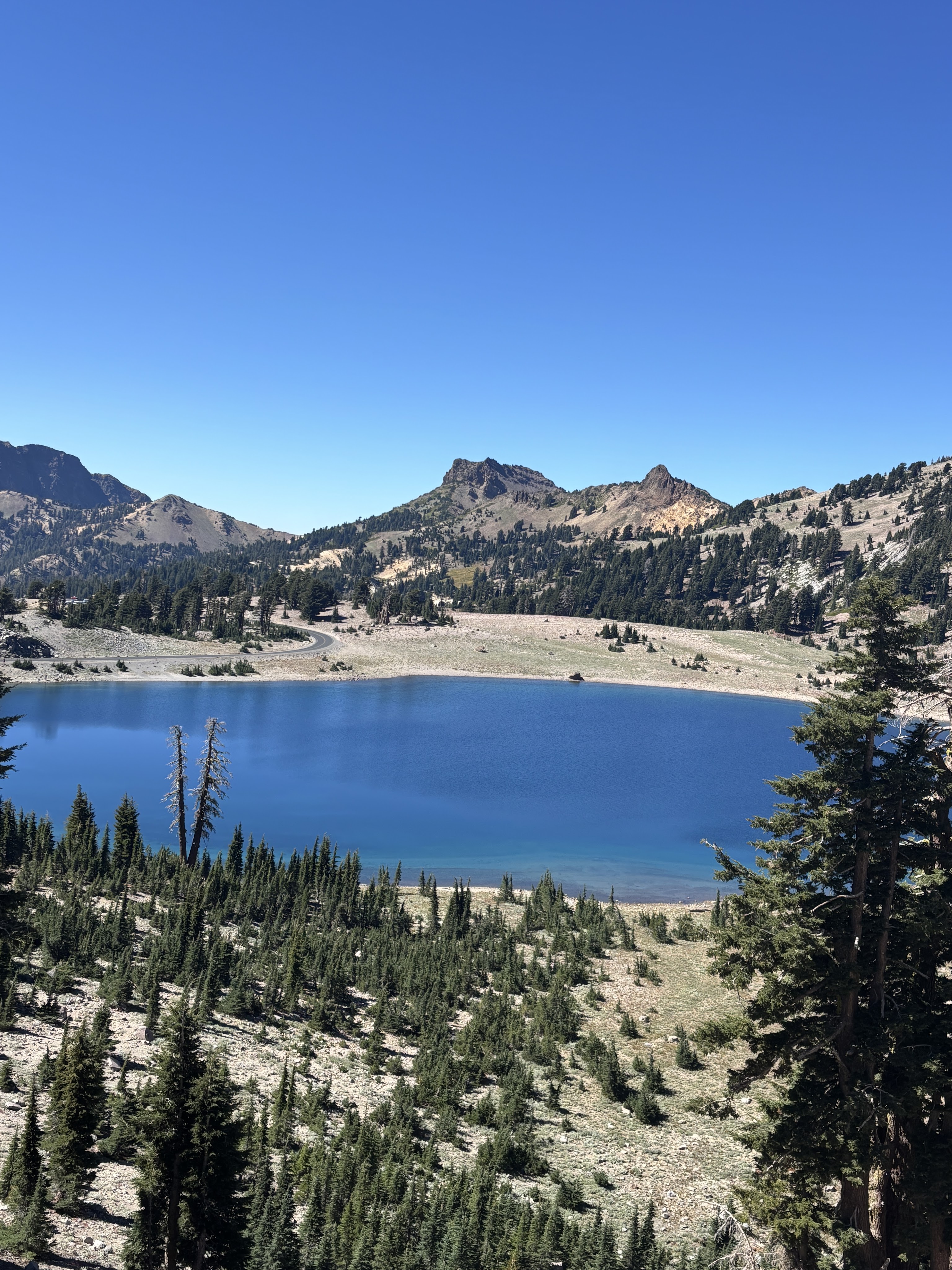
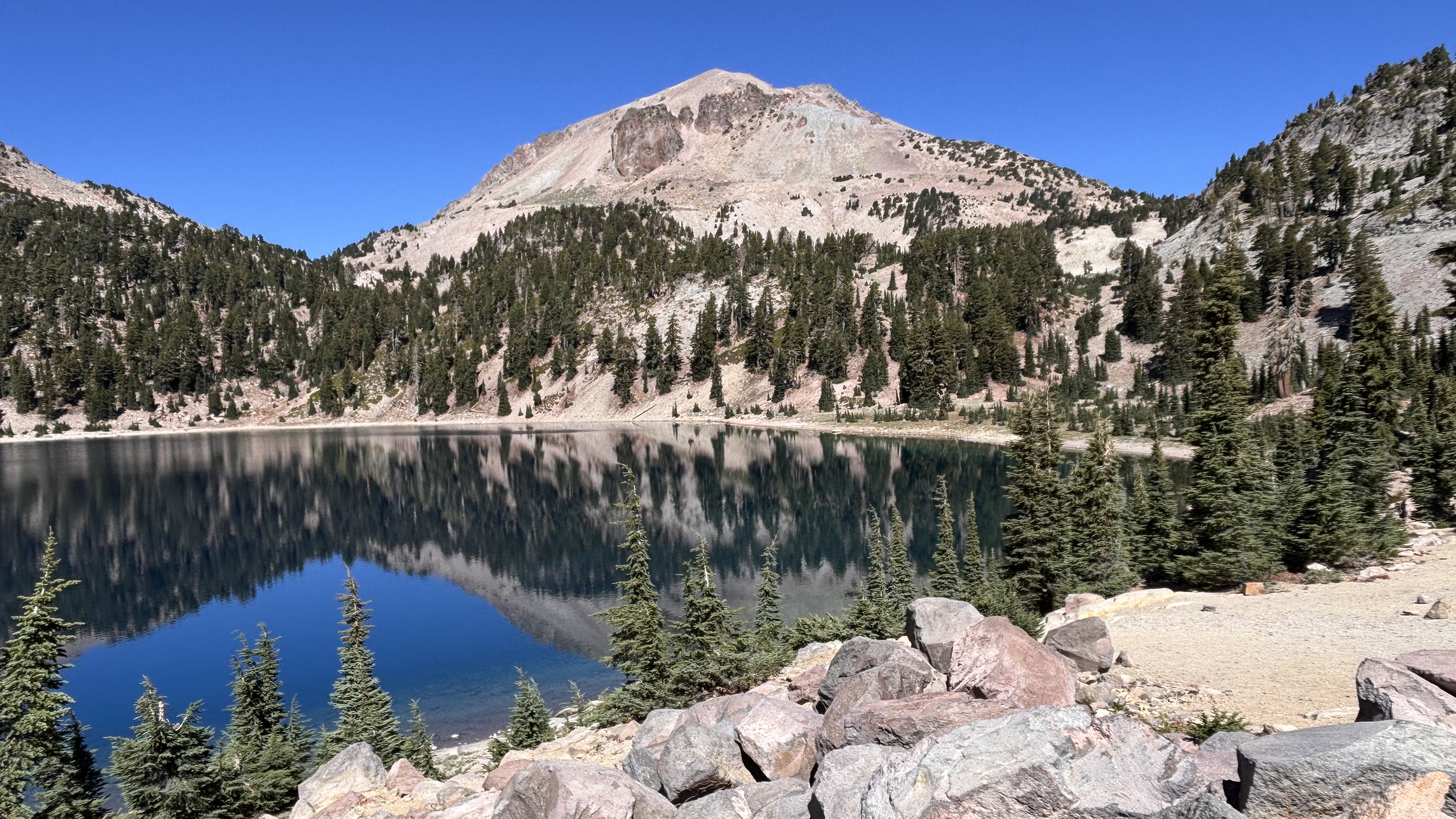
On the return trip, both much more exhausted than we should be, we stopped near Lake Helen for lunch. Helen sits at nearly the highpoint on the park road. It serves as a great mirror for Lassen Peak, resting just behind its shores. The lake is a shocking blue in the middle, transitioning to aquas and greens around the shallow edges. Just below Helen (in elevation and on the road) it Emerald Lake. As the name implies, it is undeniably green. Beautiful in its own right, the difference between these close neighbors is astonishing.
We were back to our campsite by 1:30, ready for a nap. So, we took a nap! The beauty of extra days padded into these trips is that we can just relax. And today we needed it. Tomorrow we will likely enjoy our surroundings at camp and continue to rest up. After all, Napa is calling, and we must listen.


Leave a Reply